Should I Relacquer My Saxophone?
Written By: Ginger
Our guide on what to consider before relacquering a vintage saxophone.
A fairly common question we get asked here at Musical Instrument City is why we decided to relacquer a saxophone. It is always a hard decision for us and there is a lot to consider before making that final call just as there would be for any professional player or seller. There are some saxophone enthusiasts and professionals who maintain the position that you should never relacquer a horn and for them this is never up for debate. Their answer will always remain the same. However, we do on occasion relacquer some of our saxophones and would like to share our thoughts and reasoning behind this decision. This may be helpful for buyers thinking about purchasing a relacquered horn or for anyone considering relacquering their own horn.
The Sound
In our opinion, the most important consideration for relacquering a saxophone is understanding that it will change the sound of the instrument. This does not harm the horn itself, but it will change the sound. This can be a concern for the professional player or the discerning collector. A relacquered saxophone is never going to sound quite the same as one with the original lacquer from the exact same year and this can affect the value.
The Original Lacquer
Although relacquering can be viewed as a restoration technique, we feel it is vital to evaluate the original lacquer and condition of the horn first. We advise to always preserve the original finish if at all possible. If you have a horn in pristine or good condition with the original lacquer, then this process is not for you. There are some saxophones that we will never relacquer even though they are worn down to raw brass, this is because the instrument is more valuable in its' original condition. The question starts to arise when there is a considerable amount of wear on the horn. Most vintage saxophones are anywhere from 50 to 100 years old, and they are great horns but by default that means they have had some love. We only start considering relacquering a horn if it has 20% or less of the original lacquer.
The Aesthetics
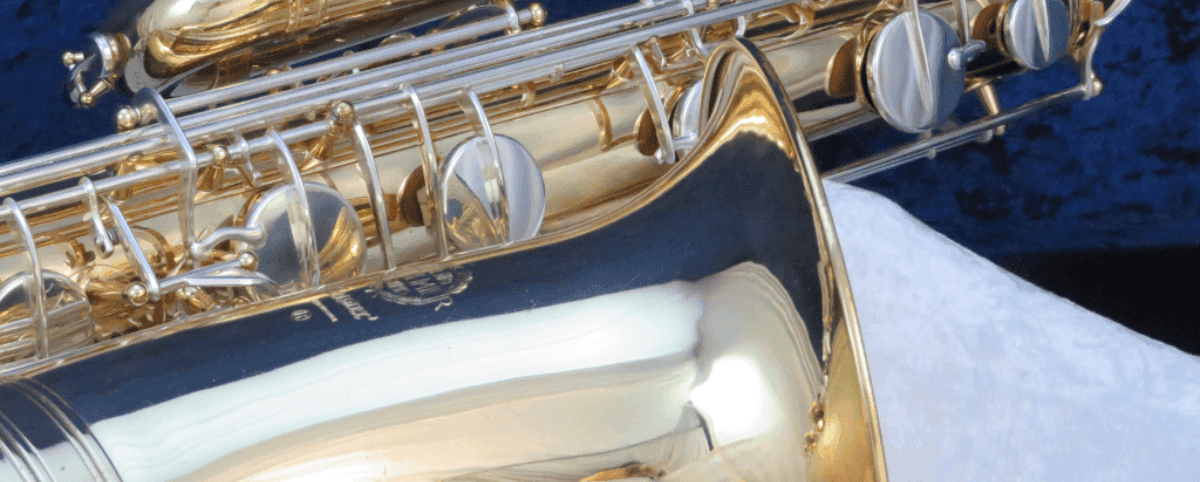
Saxophones with a considerable amount of lacquer wear, can look old and run down. One would think relacquering would bring back that dark luster; however, we have found that modern lacquers are often very light and you end up losing the vintage feel and sound of the instrument by relacquering it. This is a problem we struggled with for a very long time. Despite the considerable amount of wear on a few of our saxophones, we just did not like the look of modern lacquer on a vintage horn at all. New and shiny isn’t always better and unfortunately alternate options are limited. We have some raw brass overhauls; this is done by hand stripping the original lacquer from the entire horn and some players love the sound of a raw brass instrument. Another option is to strip the horn down to raw brass and have it silver plated, this is an expensive process and adds a little weight to the instrument but can sometimes improve the horn's sound. We were still in search of a better alternative for our vintage saxophones, after several years, we managed to connect with a repairman who mixed lacquers for Conn. The exact colors, chemicals and ratios can never be perfectly recreated, however fortunately we were able to create a custom lacquer that we think is much closer to the original both in color and chemical composition. Our custom lacquer allows us to restore a saxophone to its former glory without losing the vintage feel or compromising the sound.
The Decision
Ultimately relacquering is a personal preference. Some companies, players and collectors swear by it and believe it truly can be a part of the maintenance of a vintage horn while others strongly urge against it. The important thing to remember is that it is designed to be a restoration, maintenance and longevity practice to prolong the life of a great saxophone whose original finish cannot be preserved. Careful consideration of the original lacquer, wear, condition and knowledge of the instrument are key factors to pay attention to when considering this process. We hope that this has given a little insight into why we choose to relacquer select horns, please feel free to reach out to us if you have any additional questions about the relacquering process.
Notably Yours,
Musical Instrument City